
Carpet vs Hard Floors and Indoor Air Quality: The Allergen Truth
The honest evidence on carpet vs hard floor indoor air quality — why carpet holds particles out of the breathing zone, where the reservoir argument is real, and what to specify for wellness and allergy-sensitive hotel rooms.
There is a stubborn piece of conventional wisdom in hospitality design: rip the carpet out of the guestrooms and the air gets cleaner. It sounds obviously true — you can see dust on a hard floor, and carpet feels like a sponge for everything a guest tracks in. So spa brands, "wellness" floors and allergy-sensitive room types quietly default to hard surfaces, and the carpet conversation never happens.
The evidence is more interesting, and more divided, than that default assumes. The honest version is not "carpet is better" or "hard floors are better." It is that the two surfaces fail and succeed in different ways — and that for the air a guest actually breathes, a properly specified and maintained carpet often performs better than the hard floor that replaced it. This is the part the conventional wisdom skips. It is also the part you have to specify deliberately, because a badly chosen or badly maintained carpet earns every bad thing ever said about it.
01Two Numbers That Tell Opposite Stories
Start with the apparent contradiction, because it is the whole debate in miniature.
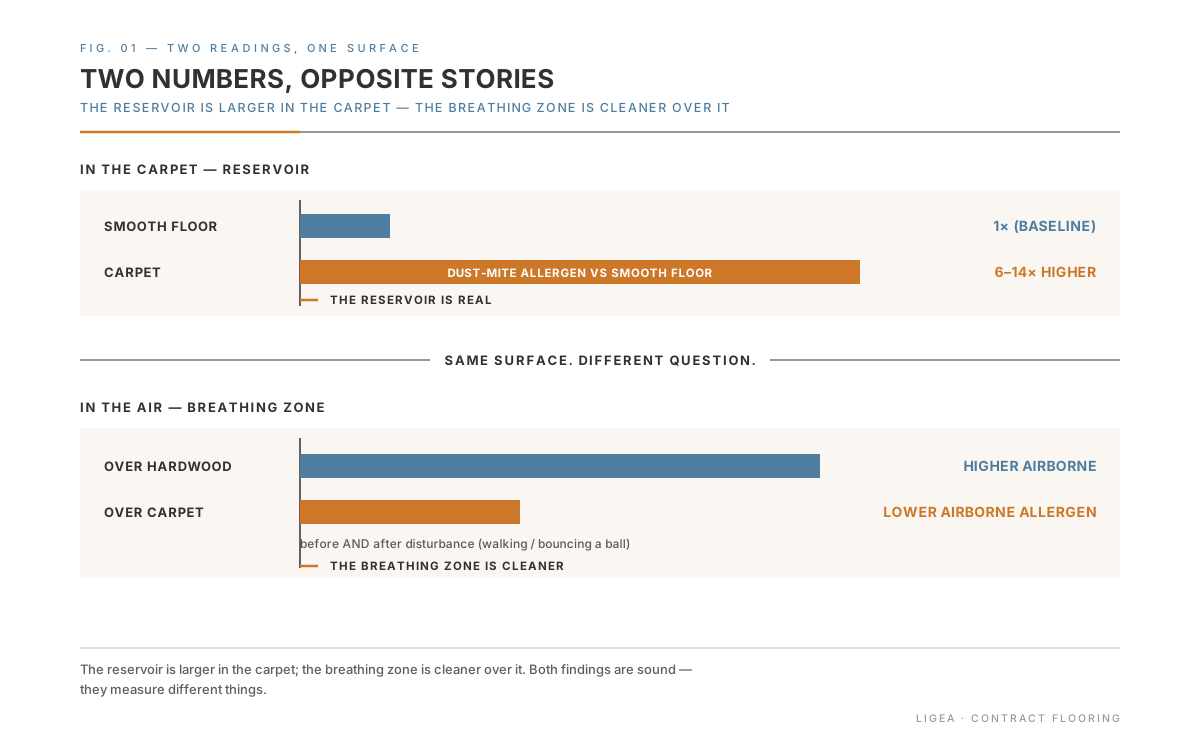
On one hand, carpet clearly holds more allergen than a hard floor. A peer-reviewed review of whether carpets impair indoor air quality found dust-mite allergen in carpeted floors running 6–14 times higher than in dust from smooth floors, and concluded — bluntly — that the available literature does not support claims that carpets are neutral for indoor air. That is the reservoir argument, and it is real: a carpet is a sink that accumulates protein, fibre and fine soil over time.
On the other hand, what sits in the carpet is not the same as what sits in the air. Independent chamber testing by an airborne-allergen research group found that even before cleaning, the concentration of cat and dust-mite allergen in the air over carpet was lower than over hardwood — and stayed lower after both floors were disturbed by walking and bouncing a ball. The mechanism is straightforward: fibre traps particles and grips them, while a hard floor lets the same particles settle loosely and re-launch with every footstep.
Both findings are sound. They are not in conflict — they measure different things. The reservoir is larger in carpet; the breathing zone is cleaner over it. Which number matters to you depends entirely on whether your guest is going to breathe the floor or eat off it. In a guestroom, they breathe it.
02The Breathing-Zone Argument, Specified Honestly
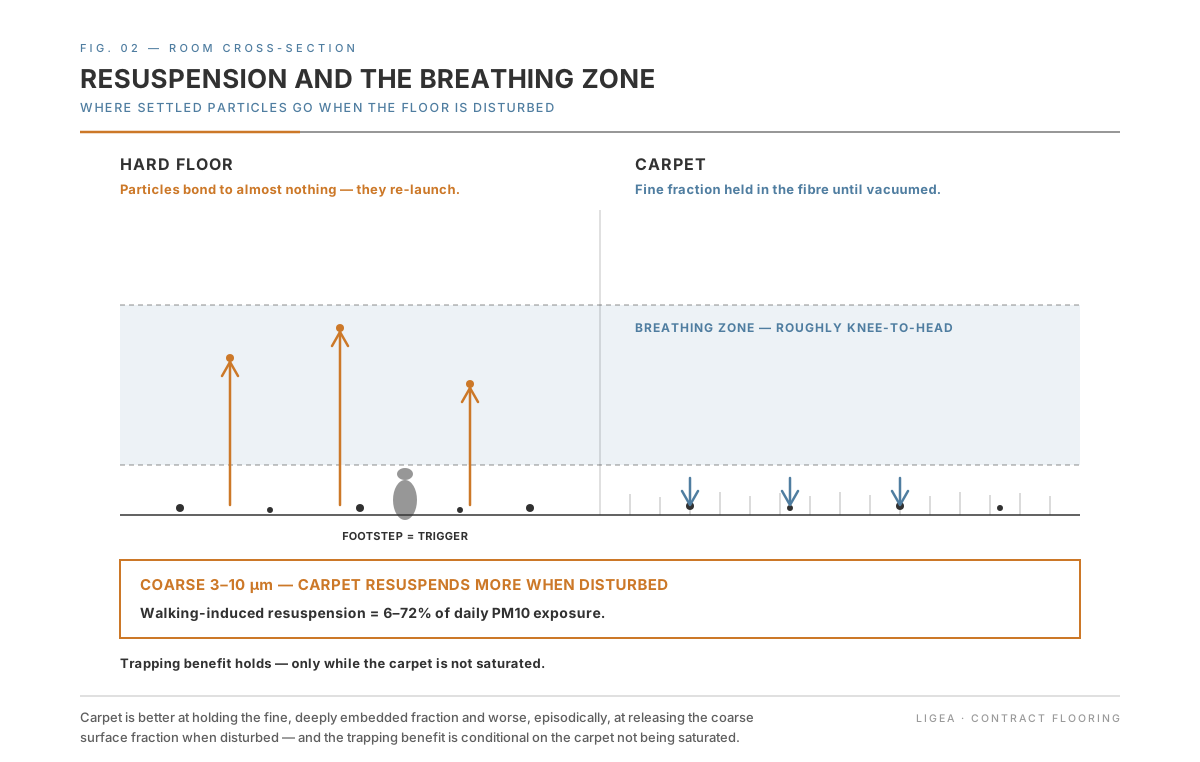
The mechanism worth understanding is resuspension. On a hard floor, fine particles settle but bond to almost nothing; routine activity — walking, a housekeeping cart, a door swinging — lifts them straight back into the breathing zone, the roughly knee-to-head band of air a person actually inhales. The Carpet and Rug Institute frames carpet's role as exactly this: it "keeps particles out of the breathing zone by trapping them in the fibres," holding soil until a vacuum removes it rather than letting it recirculate.
The honest hedge: the same review found that for coarse particles in the 3–10 micrometre range, carpet showed higher resuspension fractions than hard flooring under walking — and that walking-induced resuspension can account for a wide 6–72% of daily PM10 exposure. So carpet is not a universal particle trap. It is better at holding the fine, deeply embedded fraction and worse, episodically, at releasing the coarse surface fraction when disturbed. The design implication is precise: the trapping benefit is real but conditional on the carpet not being saturated. A carpet at the end of its soil-loading life is a worse air-quality outcome than a clean hard floor. A maintained one is generally a better one.
That conditionality is the entire specification. It is why "carpet vs hard floor" is the wrong question and "which carpet, maintained how" is the right one.
03Where Hard Floors Genuinely Win — and Dust Mites
Give the hard floor its due, because pretending otherwise is how you lose credibility with a procurement team that has read the same studies.
The dust-mite case is the strongest argument against carpet, and it is not about air at all — it is about habitat. Mites need humidity. Their bodies are 70–75% water and they cannot drink, so they depend on extracting moisture from the air. Below roughly 50% relative humidity they desiccate: one controlled study holding indoor RH under 51% for 17 months cut a mite population from 401 live mites per gram of dust to 8 — a 98% decline — and dropped allergen from 17 to 4 µg Der p 1 per gram. The lesson is not "hard floors kill mites." It is that humidity, not flooring, is the master variable for mites — which is exactly why the carpet question turns on the building's climate control as much as on the surface. In a humid, poorly conditioned environment, dense carpet pile is a more hospitable mite habitat than tile. In a well-conditioned hotel held below 50% RH, that advantage largely evaporates.
The other honest hard-floor point is for the already-diagnosed and severe. For a guest with clinically significant dust-mite or pet allergy, the larger reservoir is a real liability during the disturbance that cleaning itself causes, and several health authorities still recommend hard surfaces for the most sensitive bedrooms. A wellness programme that markets allergy-friendly rooms should not wave this away. It should answer it — which is what the next section is about.
04Off-Gassing: The Argument That Used to Be True
The "new carpet smell" objection deserves a straight answer because it is half outdated and half legitimate. That smell is off-gassing — volatile organic compounds, classically 4-phenylcyclohexene (4-PCH), a byproduct of styrene-butadiene latex backing. In the era that built the objection, emissions were unregulated and real.
They are now a specifiable, low number. Low-emitting carpet is certified against tightened VOC limits — the stricter CRI Green Label Plus tier caps total VOCs and named compounds (4-PCH, formaldehyde, styrene and others) under a 14-day California Section 01350 chamber protocol — and in Europe the GUT label and the wider Eurofins Indoor Air Comfort / EMICODE / French A+ family do the equivalent. The point for a buyer is not that off-gassing is fake; it is that it is a cert line, not a fact of carpet. Specify a low-emitting product and the objection is closed in writing. A guest is at least as likely to off-gas from a freshly finished hard floor's adhesives and coatings — that surface has its own VOC ledger, often less scrutinised than carpet's because nobody thinks to ask.
05What to Actually Specify for a Wellness or Allergy-Sensitive Room
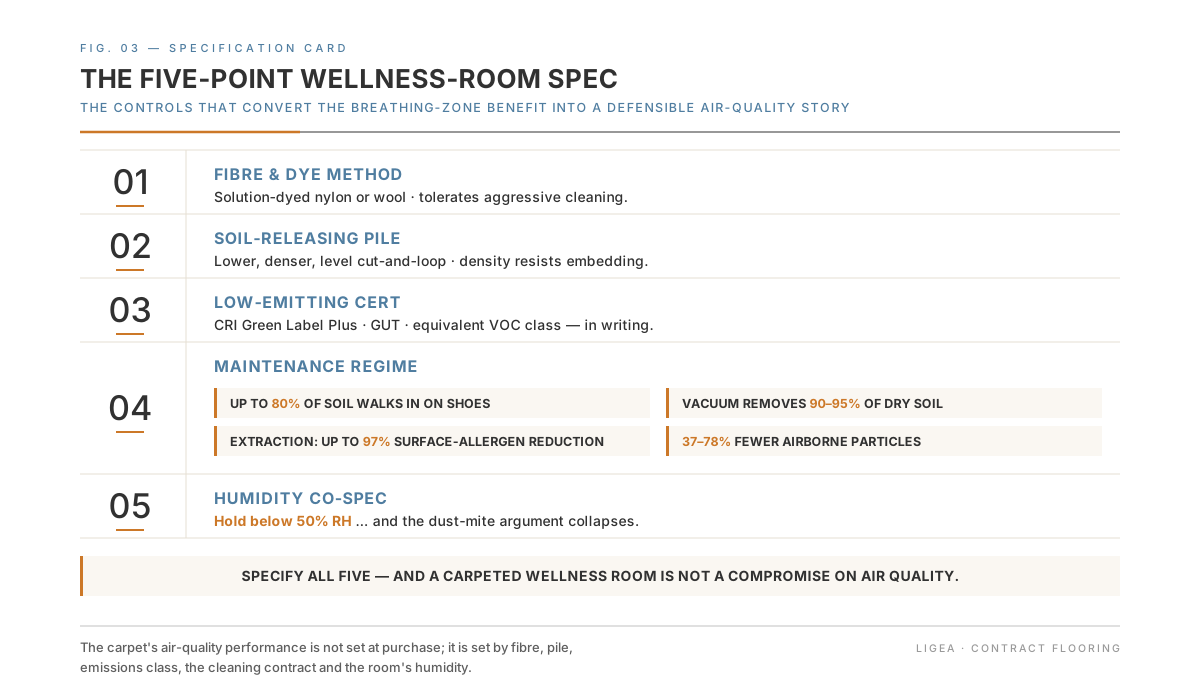
This is where the differentiated answer becomes a spec sheet. If you want carpet's breathing-zone benefit without inheriting the reservoir liability, you specify against the failure modes, not for a vibe.
- Fibre and dye method. Favour solution-dyed nylon or wool constructions that tolerate aggressive, frequent cleaning — solution-dyed colour runs through the fibre, so hot-water extraction and strong spotting do not bleach it. Cleanability is an air-quality spec, not a maintenance afterthought, because the whole benefit is conditional on the carpet staying unsaturated.
- Pile that releases soil. A lower, denser, level cut-and-loop pile holds the fine fraction but gives soil up to a vacuum far more readily than a deep, soft shag that buries it. Density resists the embedding that turns a trap into a reservoir.
- Low-emitting certification, in writing. CRI Green Label Plus, GUT or an equivalent VOC class on the line item — not "manufacturer says it's fine."
- A written maintenance regime, co-specified. Up to 80% of soil walks in on shoes, so walk-off matting at every entrance is the single highest-leverage control. Daily vacuuming with a certified high-filtration vacuum removes 90–95% of dry soil, and periodic hot-water extraction is the only method that pulls the deep-pile loading responsible for the reservoir. The same airborne-allergen research group measured up to 97% surface-allergen reduction and, depending on the sample, 37–78% fewer airborne particles after a proper extraction clean versus the soiled carpet. The carpet's air-quality performance is not set at purchase; it is set by the cleaning contract.
- Humidity as the silent co-spec. Hold the conditioned space below 50% RH and the dust-mite argument against carpet collapses. This belongs in the wellness narrative, because it is the variable that actually governs the allergen the room produces.
Specify all five and a carpeted wellness room is not a compromise on air quality. It is a quieter, warmer, lower-resuspension room with a closed VOC line and a documented cleaning regime — which is a genuinely stronger health story than a hard floor that recirculates its own dust and was never asked about its adhesives.
06What the Field Actually Says
Practitioner and community discussion tends to land in the same honest middle. The strongest real-world complaints about carpet are about old, saturated, poorly maintained carpet — the reservoir at end of life — and about deep pile in humid bedrooms, which matches the science exactly. The strongest defences are from people who maintain carpet properly and notice less visible airborne dust than on their previous hard floors, which also matches. The disagreement in the field is rarely about the mechanism; it is about whether a given building will actually maintain the floor. That is a procurement and operations question, not a flooring one — and it is the right question to put on the table before the surface is chosen, because the answer changes which surface is correct.
07Where ligea Comes In
The air-quality decision is not a product choice; it is a specification balanced across fibre, dye method, pile construction, emissions class and a maintenance regime that has to be true in operation, not just on paper — and it pulls against the budget and the design at every turn. Holding those together is the work, and it is the work we do.
At ligea we read the designer's vision and work to the developer's budget at the same time, then match the brief to the right construction and the right producer rather than to whatever one loom or print line happens to make. For an allergy-sensitive or wellness room that means specifying a dense, soil-releasing construction in solution-dyed nylon or wool, certified low-emitting against the VOC class the project's green rating requires, and co-specified with the matting and cleaning regime that keeps the carpet on the right side of the saturation line. Where the design wants soft gradients or photographic imagery we route it to printed nylon; where it wants depth and durability, to woven Axminster — and because we work across multiple producers, the air-quality spec is never bent to fit a single factory's limits. Custom shades are confirmed on a physical strike-off before bulk, and bulk lead times typically run roughly two to eight weeks — print fastest, custom Axminster longer — once design, colour and mock-up are signed off.
Explore our surfaces and constructions, or talk to us about a wellness-room spec.
08The Short Version
The clean-air case for ripping out carpet is weaker than it looks. Carpet holds a larger allergen reservoir but keeps more particles out of the breathing zone; hard floors hold less but recirculate what they have. The real variables are humidity, soil-loading and emissions class — all of which you specify, not the floor type in the abstract. Choose a dense, low-emitting, solution-dyed construction, co-spec the maintenance, hold the room below 50% RH, and a carpeted wellness room is a stronger air-quality story than the hard floor that would have replaced it. Skip any of those, and it is the cautionary tale everyone already believes.